Quick facts: ash dieback
- What it is
- A fungal disease of ash trees caused by Hymenoscyphus fraxineus, native to eastern Asia. First identified in England in 2012; likely present since at least 2005.
- Signs
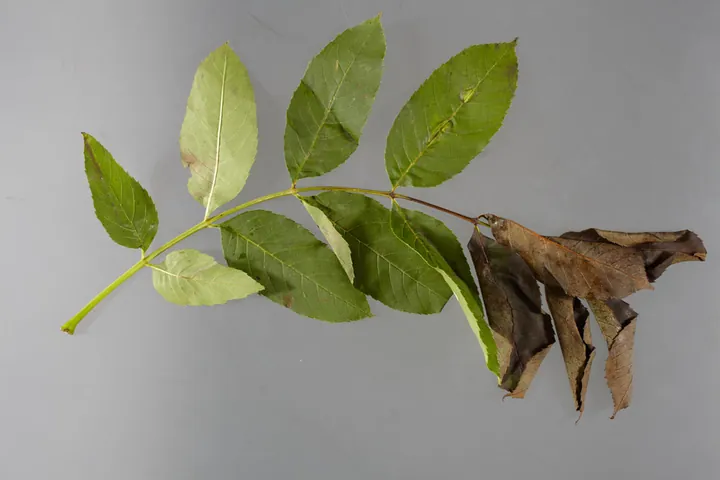
- Leaf loss and dead branches throughout the crown; clumps of new growth towards the centre of the crown; in badly affected areas, lesions at the base of the tree.
- Will it die?
- Most native ash are likely to show symptoms, but not all will die.
- Owner’s duty
- The landowner is legally responsible for the health and safety of those who could be affected by a tree. Risk-assess ash near roads, buildings and public land.
- Felling
- Felling diseased ash needs a felling licence unless dead or a real and immediate danger; trees in gardens are exempt from felling licences. TPOs still apply.
- Trees by roads
- Essex Highways can require owners to deal with private trees that endanger highway users (Highways Act 1980, s.154).
- Reporting
- Present in most of the UK. Report via TreeAlert only if in an area where it hasn’t been recorded.
Checked 27 September 2026 against: Forestry Commission: managing ash dieback in England (opens in a new tab); Forest Research: ash dieback (opens in a new tab); GOV.UK felling licence exemptions (opens in a new tab); Essex Highways: highway trees (opens in a new tab). Details can change, so confirm on the official page before you rely on them.
Who this guide is for: owners of ash trees in and around Chelmsford, Essex (in gardens, on boundaries, or next to roads and footpaths) who want to know what to look for and what they are responsible for.
What ash dieback is
The Forestry Commission describes ash dieback as a fungal disease of the common ash (Fraxinus excelsior) and other ash species, caused by Hymenoscyphus fraxineus, a fungus native to eastern Asia. It was first identified in England in 2012, though research suggests it was probably present from at least 2005. Ash are common in woodland and also in parks, gardens, hedgerows and roadside margins (managing ash dieback (opens in a new tab)). Forest Research says the disease is present in most parts of the UK (Forest Research (opens in a new tab)).
Signs to look for
According to the Forestry Commission, infection leads to leaf loss and dead branches throughout the crown of ash trees, and clumps of new growth towards the centre of the crown. In areas of high infection, the fungus can cause lesions at the base of the tree, making it more susceptible to secondary infections such as Armillaria (honey fungus). Forest Research publishes photo guides to symptoms.
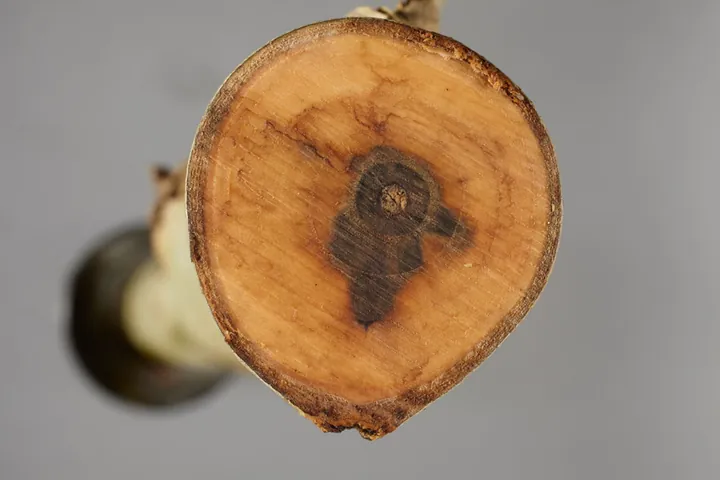
Other problems can look similar, so if a large ash near your house, a road or a footpath is thinning or dropping branches, have it looked at by an experienced tree surgeon or arboricultural consultant.
What it means for tree owners around Chelmsford
The Forestry Commission says ash dieback should be planned for and managed, especially in safety-critical locations. The owner of the land where a tree stands is legally responsible for the health and safety of people who could be affected by it, and if you manage ash near roads, railways, buildings or publicly accessible land you should carry out a risk assessment. It also points out that dead or dying ash poses a risk to the people working on it (Forestry Commission (opens in a new tab)).
That doesn’t mean every ash should come down. The Forestry Commission says some trees are tolerant, that trees in open, less humid places such as streets and hedgerows may deteriorate more slowly, and that ash standing out as healthier than their neighbours should be kept where it’s safe to do so. Retaining some deadwood can benefit wildlife.
For trees next to a road, Essex Highways says property owners are responsible for trees on their land and may be required to deal with a private tree that is a risk to highway users (highway trees (opens in a new tab)).
Permissions: felling licences, TPOs and wildlife
- Felling licences: the Forestry Commission says felling diseased ash requires a felling licence unless the trees are dead or pose a real and immediate danger. Separately, GOV.UK says a licence is not required for felling trees in gardens, churchyards or public open space (felling licence exemptions (opens in a new tab); when a felling licence is needed (opens in a new tab)). If you own woodland, fields or hedgerows, check before felling.
- Protected trees: TPOs and conservation-area rules must still be respected. See our TPO guide, and Chelmsford City Council’s rules for dead or dangerous protected trees (opens in a new tab).
- Wildlife: older ash can hold nests and bat roosts. See our nesting birds and bats guide.
Replanting after ash
The Forestry Commission says replacing trees lost to ash dieback is important, and that the species chosen should suit current site conditions and those likely in future, using a range of species where many trees are planted. Where a felling licence is granted, the area will usually need restocking (Forestry Commission (opens in a new tab)).
Frequently asked questions
What does ash dieback look like?
The Forestry Commission describes leaf loss and dead branches throughout the crown, and clumps of new growth towards the centre of the crown. In badly affected areas the fungus can cause lesions at the base of the tree, making it more open to secondary infections such as honey fungus (Armillaria).
Will my ash tree die?
Not necessarily. The Forestry Commission expects most native ash to show symptoms but says not all will die; some have tolerance, and trees in open sites such as streets and hedgerows may decline more slowly. It advises keeping ash that look healthier than those around them, where safe.
Do I need a felling licence to remove a diseased ash?
The Forestry Commission says felling diseased ash needs a felling licence unless the trees are dead or pose a real and immediate danger. However, it also says a licence is not required for felling trees in gardens. Tree Preservation Orders must still be respected.
Who is responsible if an infected ash falls?
The Forestry Commission says the owner of the land where a tree stands is legally responsible for the health and safety of those who could be affected by it, and that ash near roads, buildings and public land should be risk assessed.
Should I report ash dieback?
Forest Research says ash dieback is present in most parts of the UK, and asks for reports through TreeAlert only if you think you have spotted it in an area where it hasn’t already been recorded.
Is it dangerous to cut down a dead ash myself?
Yes, it can be. The Forestry Commission notes that dead or dying ash poses a risk to professionals working on or near it. Use an experienced, insured tree surgeon.
Sources
All checked 27 September 2026. We link to the official page rather than repeat details that change often.
- GOV.UK (Forestry Commission): managing ash dieback in England (opens in a new tab)
- Forest Research: ash dieback (Hymenoscyphus fraxineus) (opens in a new tab)
- Forest Research: TreeAlert (opens in a new tab)
- GOV.UK: when a felling licence is not required (opens in a new tab)
- GOV.UK (Forestry Commission): when a felling licence is needed (opens in a new tab)
- Essex Highways (Essex County Council): highway trees (opens in a new tab)
- Chelmsford City Council: dead or dangerous protected trees (opens in a new tab)
- Photos: “Chalara ash dieback – symptoms” (29 and 39), Food and Environment Research Agency, Open Government Licence v1.0 (opens in a new tab), via Wikimedia Commons (opens in a new tab) (cropped). Contains public sector information licensed under the Open Government Licence v1.0.
Need a tree surgeon?
If you’d like a free quote, we can pass your enquiry to an independent local tree surgeon in Chelmsford. Related services:
- Tree removal & fellingStraight felling where there’s room, or section-by-section dismantling in tight Chelmsford gardens.
- Emergency & storm-damaged treesSplit limbs, leaning or fallen trees after high winds. Response depends on local availability.
- Pruning & crown reductionCrown reduction, thinning, lifting and deadwood removal to keep a tree healthy and in proportion.
Related guides
- Fallen & storm-damaged treesWho is responsible, who to call for trees on roads and power lines, and first steps for insurance.
- TPOs & conservation areasHow to check if a tree is protected in Chelmsford, how to apply, timescales and dead or dangerous trees.
Get a free, no-obligation quote
Tell us about the job and we’ll pass it to an independent local tree surgeon covering your part of Chelmsford.